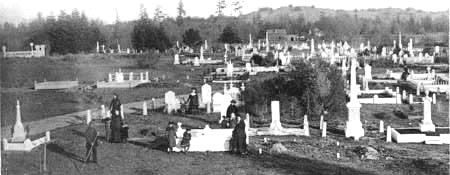

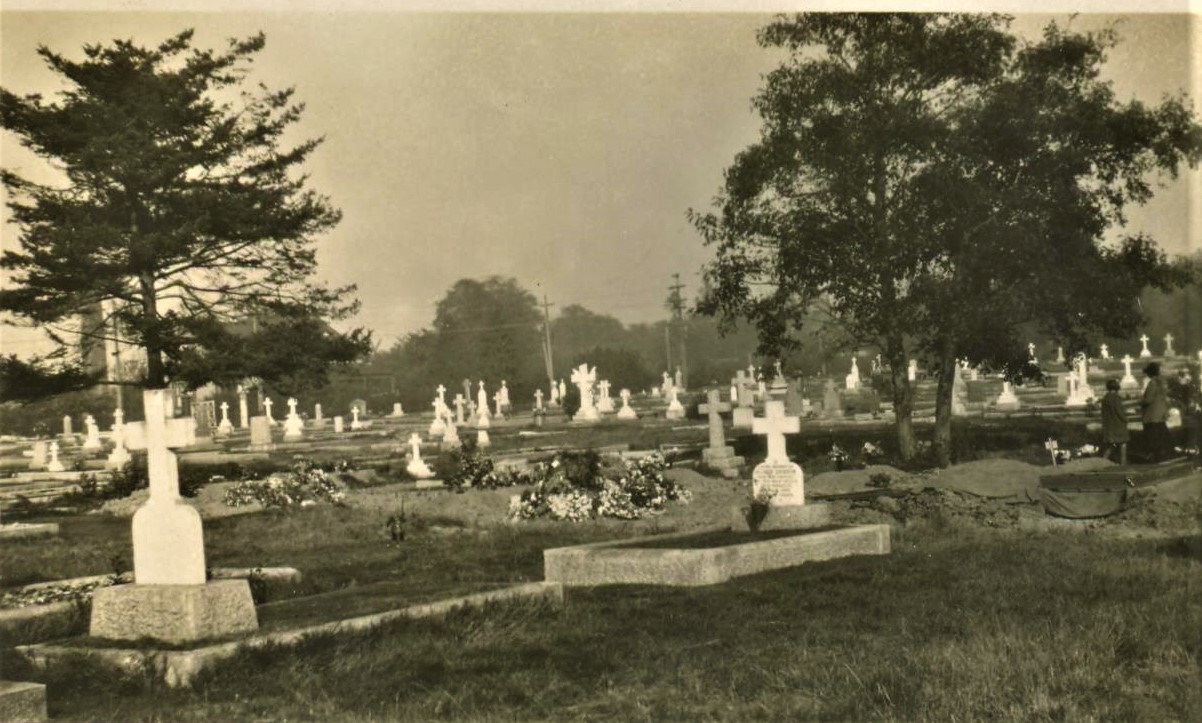
Victoria’s Ross Bay Cemetery opened in 1873 to serve the burial needs of the growing city of Victoria, BC, Canada. Overlooking Ross Bay, it is 11 hectares in size (27.5 acres) and has almost 30,000 interments. Not just a burial ground, it serves as a park and restful get-away for many people.
After Fort Victoria was founded in 1843, a small graveyard was opened at what is now the southwest corner of Douglas St. and Johnson St. In 1855, a new cemetery was opened, the Quadra Street Cemetery, now known as the Old Burying Ground (or Pioneer Square).
As the Quadra Street Cemetery was filling up, the city looked for a good location for a new, larger cemetery. The original site the city chose for Victoria’s new cemetery was 47 acres just outside the city near Ogden Point. The land was given to Victoria’s Cemetery Trustees in 1872 and was to have 12 acres cleared for use right away. Many people opposed this site, including Dr. J.S. Helmcken. They said it was too valuable to use for a cemetery, and it was a health risk because it was on the city’s windward side. Taking the protests of the citizens to heart, the city sold some of the land and bought 13 acres of cleared land at Ross Bay from Robert Burnaby (the man for whom the municipality of Burnaby would be named) for $300 per acre. By October 1872, the site was being laid out and drained, and by the following March, plots were being offered for sale. The cemetery was named Ross Bay Cemetery because it is beside Ross Bay. The bay was named after Isabella Ross who had purchased the land in the 1860’s
Ross Bay Cemetery Expansion

In 1893 the city bought the western portion of the cemetery but did not open it for burials until 1900. Then in 1906, the city bought property for $1.00 on the eastern side of the cemetery. This land was originally owned by Isabella Ross, as was all the land that made up the eastern two-thirds cemetery.
Ross Bay Then and Now

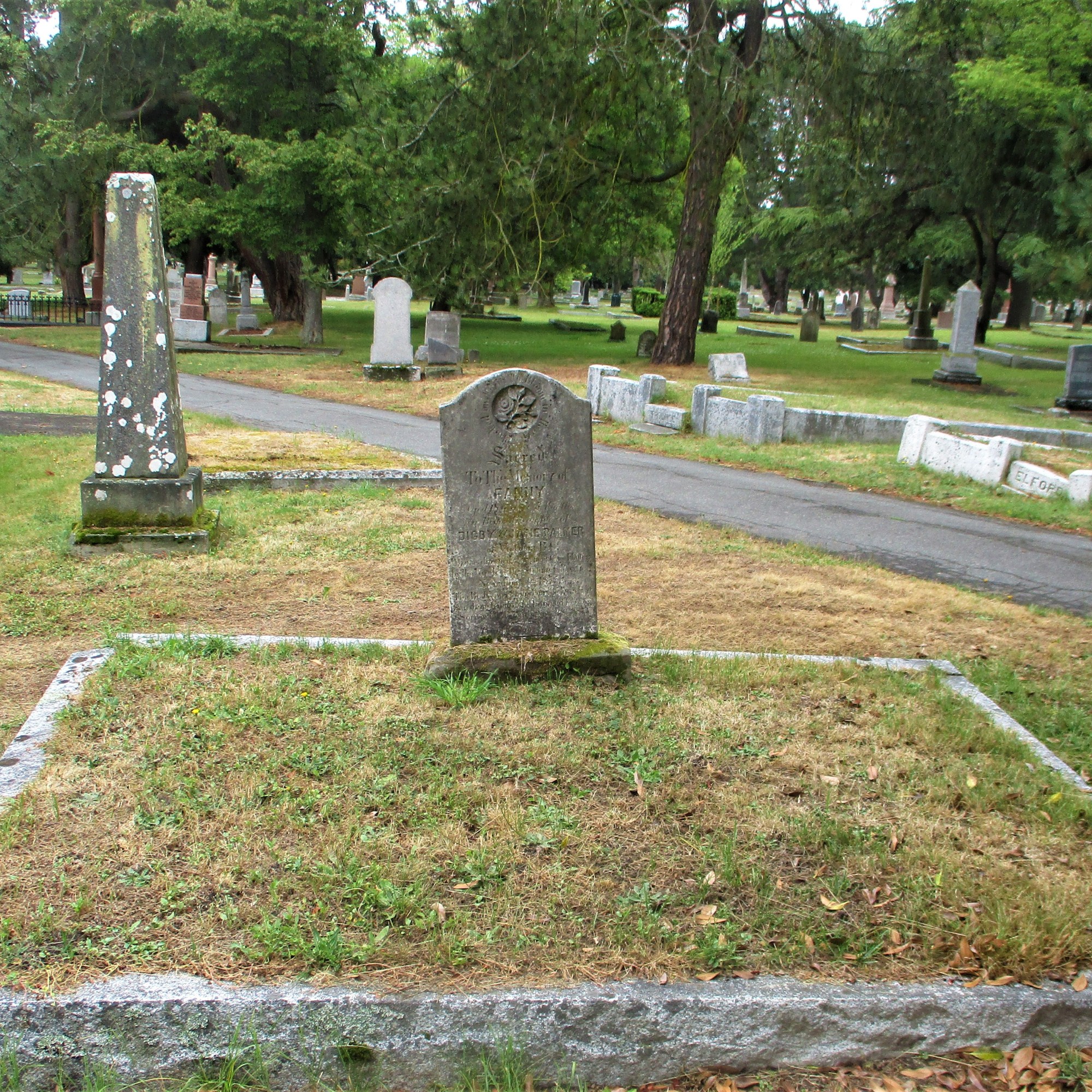
The pictures above show the grave of Fanny Palmer in Ross Bay Cemetery (F34E17). Fanny was a victim of the wreck of the Pacific in 1875. The pictures show the grave as it was in 1875 and as it is in 2019.
Statement of Significance
DESCRIPTION OF HISTORIC PLACE
Ross Bay Cemetery is a 27.5 acre graveyard located between Fairfield and Dallas Roads, bounded by Memorial Crescent on the west and the properties on St. Charles Street on the east.
HERITAGE VALUE
Ross Bay Cemetery is the most important heritage cemetery in British Columbia; its value lies in its historic monuments and largely intact historic landscape.
The over 20,000 graves of Ross Bay Cemetery – many of which are marked with magnificent locally carved head stones – provide a physical record of local, regional, and provincial culture and history. This cemetery is a museum of over one hundred years of the province’s most historical figures, such as Sir James Douglas, Matthew Baillie Begbie, and Emily Carr.
The cemetery remains largely true to its 1872 layout; the curving carriageways radiating from a central axis, variety of historic plantings, and arboreal landscape survive as physical reminders of the nineteenth century planning which intended the cemetery to be a romantic and peaceful oasis, well suited to quiet reflection and contemplation. Division of the cemetery into sections by religious denominations demonstrates the influence of local churches on the planning of the cemetery. The evolution of this landscape, as illustrated by such additions as the seawall (1911), plantings (1920s and 1930s), and the trees along Dallas Road represent later concerns to maintain the peaceful state of the environment in a growing residential suburb.
The location of the cemetery in Fairfield close to the Dallas Road shoreline is significant; originally considered to be well outside of the city, this once rural place was chosen after the citizens of James Bay had rejected the plan for it to be built in their neighbourhood. Notably, the land which comprises Ross Bay Cemetery was originally the farm of Isabella Ross, the widow of Charles Ross, a Fort Victoria founder. Surrounded by main transportation routes, local businesses, and a number of historic houses, Ross Bay Cemetery is a 19th century oasis in an area of modern suburban development.
Source: City of Victoria Planning and Development Department
CHARACTER-DEFINING ELEMENTS
The character-defining elements of the Ross Bay Cemetery include:
- the boundaries of the 27.5 acre site, in particular the seawall on Dallas Road, Fairfield Road, and Memorial Crescent;
- the views of the ocean from the cemetery through the Dallas Road plantings;
- elements of the historic landscape relevant to its 1872 design, such as curving carriageways and surviving plantings;
- plantings and carriageways from the 1930s and 1940s;
- all marked and unmarked graves;
- the variety of carved headstones and grave markers, attributable to a number of historic local monument makers, and which distinguish graves of various religious denominations, ethnic groups, social classes, and occupations.
COMMONWEALTH WAR GRAVES UPGRADE

In 2006 the Commonwealth War Graves Commission replaced military markers in sections S and W near the Cross of Sacrifice. The City of Victoria Parks Department installed a new automated sprinkler system to ensure that the flower beds are watered regularly.
Ross Bay Cemetery trees
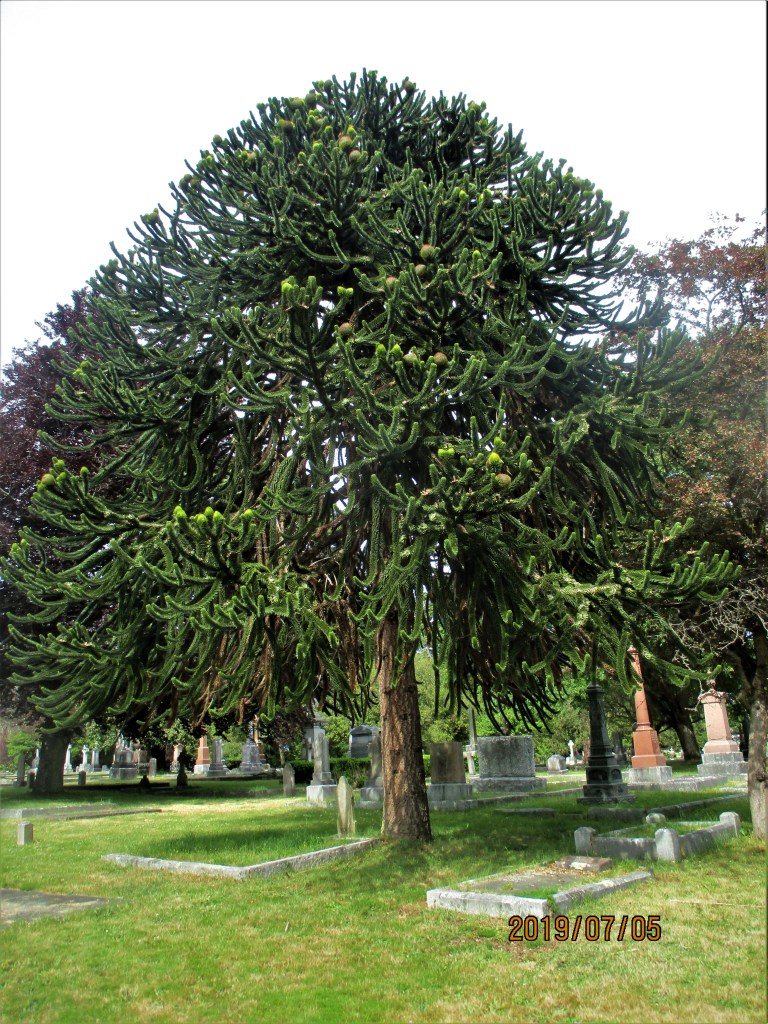

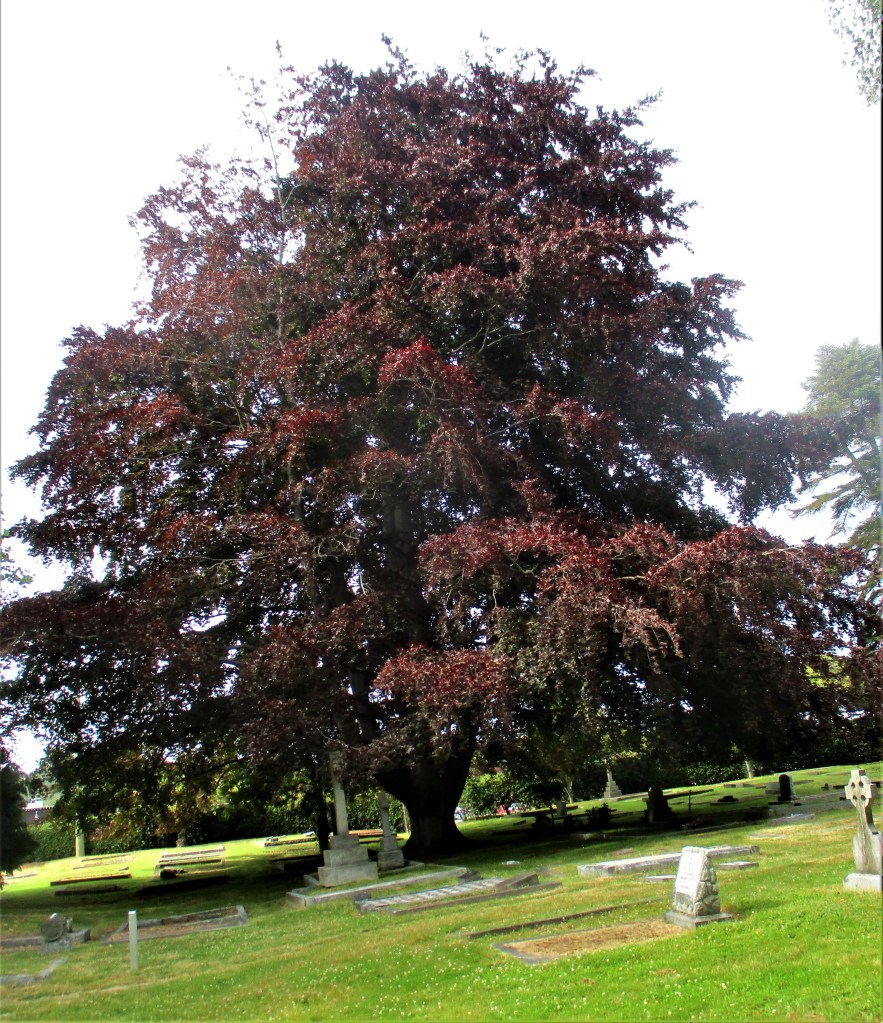

The trees found in old cemeteries may be some of the oldest and largest types of their kind in the area as they were to some degree protected from being cut down. Cemeteries are not only memorials to the dead; they also have secured a vital function as horticultural repositories.
As can be sene in the photos, the cemetery was quite bare in the 1880s. Most of the trees were planted in the 1930s, under the direction of the City of Victoria Parks Department. In fact, the Parks Department formerly used Ross Bay Cemetery as a kind of warehouse of tree species.
Whenever the city needed to plant some more trees along its boulevards, it would start with clippings from the trees at the cemetery. Today, many trees in the city have roots in Ross Bay Cemetery. There are many pines, ornamental cherries and plums as well as shrubs like holly, yew, laurel, boxwood and lilac, most planted after the cemetery opened.
Sisters of Saint Ann
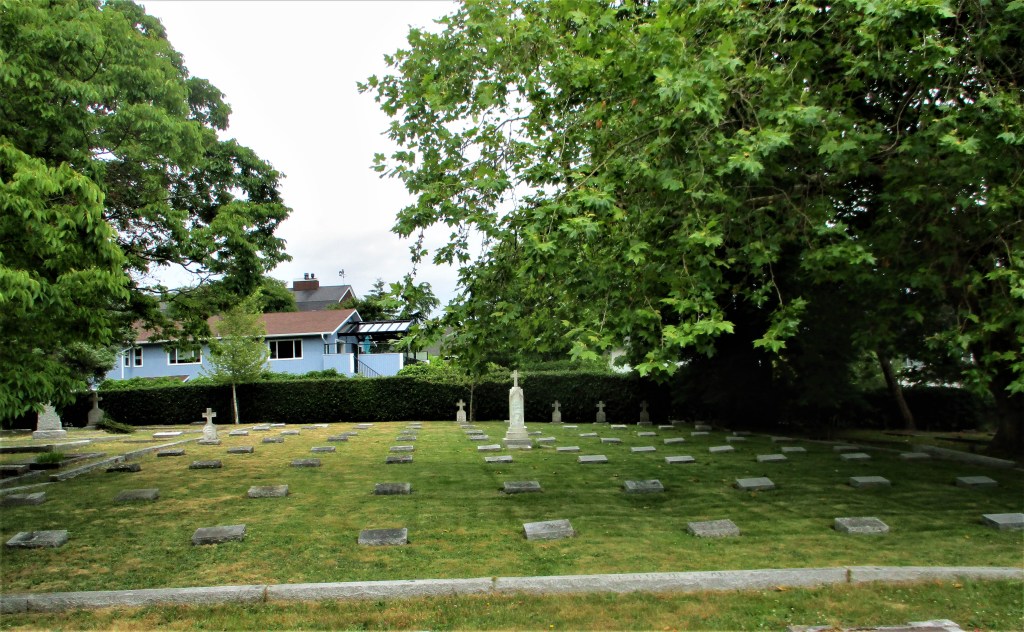
Not everyone buried in Ross Bay Cemetery was originally buried there. The first transfers came when the Old Burying Ground (Pioneer Square) was closed. Only a few of the approximately 1300 remains were moved from there to Ross Bay Cemetery in the 1870s and 1880s.
Later, others came from the Songhees Indian Reserve on Victoria’s Inner Harbour when it was sold for development in 1912. Some of these graves were moved to Esquimalt, west of the City, but the Roman Catholic graves were moved to Ross Bay Cemetery.
The last set of transfers came when St. Ann’s Academy was purchased by the provincial government in the 1970s. Up until 1908, the Sisters who died while at St. Ann’s Academy (a convent) were buried in consecrated ground there.
The Sisters who died after that was full were buried in a separate area in Section U of Ross Bay Cemetery. When the government bought St. Ann’s, the old graves were exhumed and moved to the Ross Bay plot to rest with the other Sisters.
Ross Bay Cemetery First Burials
Pearse, Mary Liticia
December 28, 1872 B83W29
Died at Fernwood, Victoria, British Columbia, Dec 25, 1872, Mary Laetitia, beloved Wife of Benjamin William Pearse, aged 32. Funeral from Christ Church cathedral. Mrs Pearse, who had been an invalid for some years, was supposed to be slowly regaining her health when the Dread Visitor crossed the threshold. Chief mourners were the bereaved husband and Judge Pemberton. The remains were interred in the New Cemetery [Ross Bay cemetery]. Amongst the man who followed the remains to the grave were His Excellency the Lieutenant-Gov, Sir James Douglas, Hon Dr Helmcken, Mr McCreight, Dr Tolmie, Donald Fraser, Roderick Finlayson, K McKenzie, several ladies.
Curtis, William Beauchamp (infant)
March 1 1873 B82W30
No Obit No Marker
O’Hara, Katie L
March 6, 1873 22yr B82E29
Died at Victoria, British Columbia, Mar 4, 1873, Mrs Katie L O’Hara, wd wife of late William B O’Hara, of Portland, Ore., aged 22. Funeral will take place from her late residence, corner Meares/Quadra Streets.
Mansell, Anne
March 6, 1873 8yr B82E31
No Obit? Marker
Watson, Isabell Florance
March 7, 1873 16yr F37E19
Died at Victoria, British Columbia, Mar 4, 1873, Isabella Florence, 3rd Daughter of Adam/Mary Watson, aged 16
Marker
Kay, Nina Fannie
March 12, 1873 5yr A29E30
Died at Victoria, British Columbia at St Ann’s Convent, Mar 10, 1873, Nina Fannie, only Child of William H Kay, aged 5.
No Marker
Chinaman # 1
March 18, 1873 54yr K1E6
No obit No Marker
This grave was reused in 1958.
Silk, Owen Baron Guy 83 Died July 21, 1958
Anderson, Maggie 85 Died July 31, 1958
No Marker
Coulter, (still born)
April 2, 1873 G71W27
This is not a good address Plot 71 would be in Block H, but clearly marked in the burial book.
Porter, Mary
April 2, 1873 48yr A60E30
Died in Esquimalt District, British Columbia, Mar 29, 1873, Mary, Wife of James Porter, aged 48, Native of Surrey, England.
Marker
Pottinger, William
April 3, 1873 31yr F19E16
No Obit No Marker
Haiponi, Charles
April 3. 1873 38yr A54E31
No Obit No Marker
Hayward, Mabel
April 13, 1873 11Weeks A78E30
Died at Victoria, British Columbia, Apr 1, 1873, Mabel, Daughter of Sarah/Charles Hayward, aged 11w.
*Moved……now in M61W09 ???
There is still a Henry William Hayward buried at this location and two Haywards (Alice Edith, 16 and Edward, 14) buried in the next plot A77E30??
Marker
Miller, William Henry
April 21, 1873 58yr A48E30
Died at Victoria, British Columbia, Apr 11, 1873, William H Miller, Native of Maryland, aged 58y, 11m, 11d. A black pioneer , who came here in the first rush of 1858 and for several years was in the employ of Wells-Fargo as porter. Died of consumption. He was at one time quite a prominent man among his race and very trustworthy. A 048 E 30
No Marker
Jones, George
April 21, 1873 4yr A34E30
No Obit No Marker
No Marker
Philardon, Louis
May 1, 1873 55yr C12W26
No Obit No Marker
Gronow, David
May4, 1873 42yr F18E16
No Obit ? No Marker
 Old Cemeteries Society of Victoria